
Ordinary course agreements
carry extraordinary consequences.
Lenders, servicers, and investors sign a lease, a license, or an engagement letter most weeks, and each one arrives looking routine. The form never is. Goldsmith Associates reads the paper the other side wrote, fixes what it hides, and adds what it left out. Then you sign.
Your seat
OriginatorServicer
Your vendor
CriticalRoutine
Your stage
SigningRenewal
Your paper
StandardCustom
The side that wins is whoever wrote (or negotiated) the contract.
An insurer, a credit union, a REIT manager, an escrow agent, a bank, and a lender each signed a vendor form and learned what it allowed only after the loss. The vendor wrote the clause. In every row, that clause set the result, so the loss was settled at signing, years before anyone filed suit. Your stack holds the same clauses.
Fix your form-
Your Software Build
The vendor building an insurer’s new system walked off the project.
The Clause
No liability for consequential damages, except for willful acts.
The Damages
$3.96M
The Award
$204K
The Loss for
Not Negotiating$3.76M
for not negotiating
the willful‑acts exception -
Your LOS Rollout
A credit union’s loan-system interface never worked, years past the go-live date.
The Clause
Customer’s sole and exclusive remedy is a refund of the fees paid.
The Damages
est.$278K
The Award
est.$162K
The Loss for
Not Negotiatingest.$116K
for not negotiating
the refund‑only remedy -
Your Accounting System
A mortgage REIT manager’s accounting software failed, and its own staff absorbed the cleanup.
The Clause
No liability for indirect, incidental, special, or consequential damages, including lost data.
The Damages
$1.4M
The Award
$0
The Loss for
Not Negotiating$1.4M
for not negotiating
the damages waiver -
Your Wire Platform
A title and escrow company declined its bank’s dual approval for wires, and a hacker sent out $440,000.
The Clause
Customer declines dual control and bears the risk of payment orders sent under single control.
The Damages
$440K
The Award
$0
The Loss for
Not Negotiating$440K
for not negotiating
the dual‑control waiver -
Your Armored Carrier
Four bags of a bank’s currency, worth $165,450, went missing from its armored carrier.
The Clause
Carrier’s liability is limited to $30,000 for each sealed shipment, and any excess is the bank’s risk.
The Damages
$165K
The Award
$30K
The Loss for
Not Negotiating$135K
for not negotiating
the per‑shipment cap -
Your Subservicer
A lender said its subservicer’s loss mitigation and foreclosure work cost it $38 million.
The Clause
Subservicer is liable only for willful misconduct or gross negligence, not for good‑faith errors in judgment.
The Damages
$38.2M
The Award
$247K
The Loss for
Not Negotiating$38M
for not negotiating
the liability standard
Figures are drawn from the court record, and some are estimates built from it.
Consumers have statutory protections. Businesses need contractual ones.
Consumer statutes rescue a misled household, while a business “may not be protected in the same way,” as the CFPB conceded in January 2025. A company gets its contract. Even where a business can invoke those statutes, they police deception rather than bargains, and a cap or waiver printed in plain view usually stays the deal as signed. The contract is the protection.
Secure your protectionsIt’s possible you have a claimIt’s unlikely you have a claimIt’s highly unlikely you have a claim
General information for a typical independent mortgage banker, not legal advice.
Signed as-is, every term stays in their favor. Reviewed first, every term is yours to negotiate.
Every vendor form hides a handful of terms that look routine at signing and expensive at renewal, at an outage, or at the exit. Each one has a fix. Goldsmith Associates trades the red column for the green one, term by term, while the vendor still wants the signature. After signing, red stays red.
Keep your leverageSigned as-is
without Goldsmith
- Outage, Full PriceThe system goes down, and the full monthly fee is still due.
- Credits Only, No RefundA credit on next month’s bill is your “sole and exclusive remedy.” Part 60 Put-Back Litigation, N.Y. 2020
- You Keep PayingForce majeure excuses the vendor, cyberattacks included, never your invoice.
- You Can’t ExitNo way out before the term ends, however the service performs.
- You Pay Exit FeesThe vendor bills deconversion at its own price, $158,700 in one case. Peoples Bank, M.D. Tenn. 2016
- Renews Without YouThe term rolls over for years unless notice lands in a narrow window.
- Terms Change SilentlyTerms live at a web address, “as updated from time to time.”
- You Indemnify ThemYour indemnity covers the vendor’s own legal fees. Choice Escrow, 8th Cir. 2014
- Promises Don’t CountAn integration clause erases the sales deck.
- Your Data, Their ProductThe vendor may use “de-identified” borrower data, AI training included.
- Sold to a Rival, You StayThe vendor is sold, even to a competitor, and you stay bound. Rocket and Mr. Cooper, Oct. 1, 2025
- Minimum Owed AnywayThe monthly minimum stays due when volume drops. ICE and Ellie Mae deck, 2020
- You Guarantee It PersonallyThe lease demands an uncapped guaranty from the owner.
- Your Rent Keeps ClimbingPass-through expenses with no cap and no audit right.
- They Keep What They SawThe NDA lets them use whatever they “retain in unaided memory.”
- You Pay After You LeaveAn advisor’s tail reaches any financing for up to two years.
Reviewed first
by Goldsmith
- Pay for UptimeFees track uptime, with credits when it slips.
- Refund Plus TerminationCredits, real refunds, and a clean exit when failure becomes chronic.
- Fees AbateFees stop during the event, and a long one lets you leave.
- Exit RightA termination right for chronic failure.
- Exit Fees CappedLeaving costs what you agreed on day one, not what the vendor bills.
- Renewal on NoticeRenewal stays your decision, on your timeline and at a known price.
- Terms LockedThe signed terms control, and changes need your signature.
- Mutual IndemnityEach side covers its own fault, and its own legal fees.
- Promises in WritingThe promises that matter go into the order form.
- Data Stays YoursData used only for the service, never for training.
- Exit on a SaleIf the vendor is sold, you can leave, with help moving to the next one.
- Minimums Step DownWhat you owe follows the volume you actually send, month by month.
- Guaranty CappedThe owner’s personal exposure stays limited and known.
- Expenses CappedA cap on controllable expenses, with an audit right.
- Confidences KeptYour confidential information stays yours after the deal ends.
- Tail CappedFees after you leave cover only the advisor’s own work.
When you need a quick look, you get a low-cost quick look.
“Can you make sure this is okay to sign?” is all the email has to say, and Goldsmith Associates flags the terms that matter. The answer comes in plain business terms. You decide whether to sign it as written or send it back, and we revise only the terms you choose. The deep dive starts only when you ask.
Check your terms- 01 You send it: email us the agreement asking for a quick look, before signing, during the term, or at renewal.
- 02 We flag it: we identify each off-market term that’s a risk to you.
- 03 You decide it: keep the terms as written, or ask us to revise them. If you ask, an optional inner loop, We revise it: we use a light hand to revise only the critical terms, then returns to You decide it.
- 04 You sign it: you sign with the terms how you wanted them, then the cycle starts again with the next agreement.
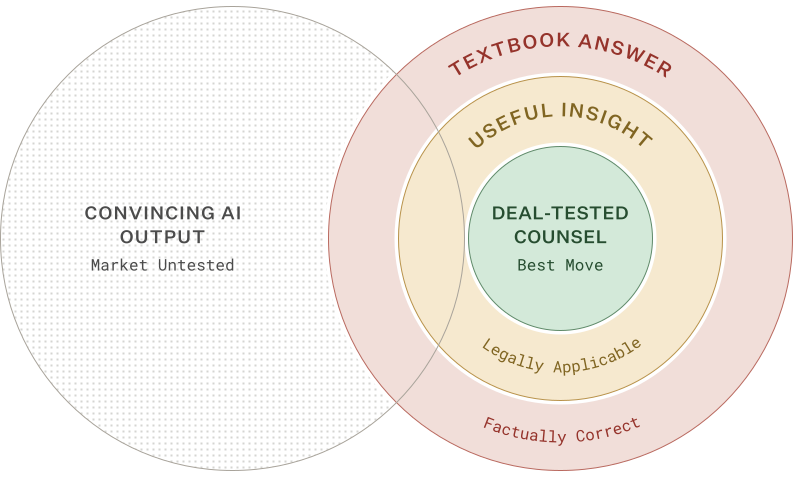
AI seems right but often isn’t. Textbook answers graze the target. Deal-tested counsel hits the bullseye.
Goldsmith Associates encourages clients to run a contract through AI, because a fast first read surfaces the questions worth bringing to counsel. A right answer, however, can still be the wrong move. We test every issue against the entire agreement, the related documents, the factual record, the market standards, the negotiation history, the parties’ leverage, and the deal itself… so our advice and counsel are dependably practical, actionable, and commercial.
1 legal call for 213 types of agreements only for mortgage market participants.
Every agreement below is one a lender, servicer, or investor signs in the ordinary course, and any one of them can carry an extraordinary consequence. The list keeps growing. Goldsmith Associates reads each one against the same market terms. Custody, warehouse, and whole loan paper live on their own practice pages. One call covers the folder.
Cover your paperFintech Platforms
The origination and servicing systems that carry a loan from first click to payoff: LOS, POS, PPE, eClosing, and servicing platforms.
- loan origination system (LOS) license
- point-of-sale and borrower portal SaaS
- product and pricing engine (PPE)
- eClosing and remote online notarization (RON) platform
- eNote and eVault services
- document preparation services
- credit report reseller agreement
- income and employment verification (VOE/VOI) services
- flood determination services
- fraud and data verification tools
- automated valuation model (AVM) license
- CRM and marketing automation
- loan quality and QC software
- HMDA and compliance reporting software
- fee and disclosure tool
- appraisal management platform
- MI rate and ordering integration
- servicing system license
- subservicer portal access terms
- investor reporting software
- payment processing and lockbox
- borrower payment portal
- default and loss mitigation platform
- escrow analysis and tax service
- insurance tracking and force-placed program
- document imaging and storage
- call recording and IVR
- collateral tracking
- MSR valuation and analytics subscription
- hedging and pipeline analytics
- loan trading and bid-tape platform terms
- market data feed license
- subservicer change-of-control addendum
Software & IT
The infrastructure, security, software, and AI contracts behind every desk.
- master services agreement (MSA)
- statement of work (SOW)
- cloud hosting (IaaS/PaaS)
- managed IT services
- managed detection and response
- penetration testing engagement
- on-premise software license
- maintenance and support agreement
- implementation agreement
- source code escrow
- disaster recovery services
- telecom and UCaaS
- hardware purchase and leasing
- website development agreement
- domain and hosting terms
- e-signature platform terms
- click-through and order form review
- deconversion fee schedule
- AI tool SaaS license
- enterprise LLM terms
- AI vendor governance addendum
- model risk documentation rights
- data training restriction addendum
- speech analytics agreement
- chatbot and virtual assistant terms
- document AI and OCR services
- automated underwriting model license
- fair lending model testing engagement
- robotic process automation license
- AI output indemnity terms
- open-source license review
- AI acceptable use policy
- chatbot output warranty
- model change-notice addendum
Settlement Vendors
The firms that value, close, record, and review the loan.
- appraisal management company (AMC) agreement
- title and settlement agent agreement
- closing instructions
- notary signing agent services
- recording and assignment services
- MERS membership application and Rules
- MERS eRegistry addendum
- MERS Link terms
- trailing document services
- courier and vault storage
- property inspection and preservation
- broker price opinion (BPO) services
- due diligence (TPR) firm engagement
- QC file review outsourcing
- post-closing audit services
Advisors & Valuation
The valuation firms, advisors, auditors, and consultants a capital markets desk hires.
- MSR valuation firm engagement
- whole loan valuation services agreement
- placement agent agreement
- broker-dealer engagement letter
- sell-side advisory mandate
- loan sale advisor agreement
- hedge advisor agreement
- rating agency engagement
- independent auditor engagement letter
- compliance consulting agreement
- regulatory exam support engagement
- finder’s fee agreement
- consulting agreement for a former executive
- expert witness engagement
Data & Confidentiality
The paper that governs who sees the data and what they may do with it.
- mutual NDA
- one-way NDA for a bid tape
- clean team agreement
- non-circumvention agreement
- data processing addendum
- information security addendum
- data sharing agreement
- data license agreement
- lead purchase agreement
- trigger lead agreement
- SMS and TCPA consent vendor terms
- breach notification addendum
- data return and destruction certificate
- bid process letter
- confidentiality joinder
- privacy policy and website terms
Real Estate & Facilities
The leases for headquarters, branches, and desks, and the service contracts that keep them running.
- office lease
- retail branch lease
- lease renewal and extension
- lease amendment
- sublease
- assignment and assumption of lease
- lease guaranty
- SNDA
- estoppel certificate
- work letter and tenant improvements
- coworking membership
- parking agreement
- signage license
- landlord consent
- lease surrender agreement
- lease abstract
- portfolio lease abstract program
- holdover and relocation negotiation
- janitorial and cleaning services
- security guard services
- HVAC and maintenance contracts
- furniture lease
- moving and relocation services
- shredding and document destruction
- records storage
- mailroom and print services
- equipment maintenance
- vending and food service
- landscaping
- facility management agreement
People & Workforce
The agreements that hire, pay, keep, and release the team.
- offer letter
- executive employment agreement
- loan officer compensation plan
- branch manager agreement
- producing branch agreement
- non-solicitation agreement
- non-compete agreement
- confidentiality and invention assignment
- severance agreement
- separation and release
- retention and stay bonus
- commission plan
- independent contractor agreement
- PEO agreement
- staffing agency agreement
- benefits broker agreement
- phantom equity and profit interest grants
- garden leave agreement
- arbitration agreement
- remote work agreement
- team lift-out onboarding
- staff augmentation agreement
- recruiting firm agreement
Banking & Insurance
The banking, payment, and coverage paper behind the balance sheet.
- treasury management agreement
- operating account agreement
- ACH origination agreement
- wire transfer agreement
- positive pay services
- escrow and custodial account agreements
- merchant services
- corporate card program
- equipment financing
- fidelity bond
- errors and omissions policy
- cyber insurance policy
- D&O policy
- license surety bonds
- insurance broker agreement
- premium finance agreement
- key person insurance
Marketing & Referral
The partner, referral, and marketing paper, with RESPA items reviewed for compliance.
- lead generation agreement
- co-marketing agreement (RESPA compliance review)
- marketing services agreement (RESPA compliance review)
- affiliated business arrangement (RESPA compliance review)
- desk rental agreement (RESPA compliance review)
- advertising agency agreement
- sponsorship agreement
- endorsement agreement
- trademark license
- affinity partner program
- call center and BPO agreement
- direct mail vendor agreement
- referral program terms
- joint venture agreement
Notices & Exits
The letters that arrive after signing, where the ordinary course does its quiet damage.
- renewal notice letter
- non-renewal notice
- price-increase objection
- change-of-control notice response
- termination for convenience notice
- termination for cause and cure notice
- transition services request
- data return and destruction demand
- SLA credit claim
- force majeure notice and response
- audit request letter
- subcontractor approval request
- consent to assignment
- estoppel and acknowledgment letter
- vendor settlement agreement
- notice of breach and cure notice
- contract amendment and renewal letter
Intellectual capital compounded across
thousands of agreements papered right.
Because Goldsmith Associates is lead counsel on dozens of secondary market transactions every year, we have visibility into prevailing market dynamics, dexterity with evolving regulatory requirements, proficiency with trending industry practices, and familiarity with major market makers. Our clients reap the dividends of this intellectual capital in the form of practical advice backed by actionable intelligence.
Sharpen your strategyA standard vendor agreement is standard for the vendor, written by its counsel to cap its liability, exclude consequential damages, and limit the remedy to service credits. Courts enforce those terms between businesses. A quick look from Goldsmith Associates flags the few terms that matter, so a vendor failure stays recoverable.
AI tools spot clause issues quickly, and Goldsmith Associates encourages clients to run a form through one before sending it over. Spotting is not settling. A chatbot redline often meets a vendor who rejects it, while a deal-tested change reflects the terms mortgage vendors actually accept.
An LOS or SaaS agreement for a mortgage lender should carry service levels, audit rights, a breach notice clock, data return on exit, and a liability cap sized to the real exposure. Minimums matter too. The monthly minimum fee, deconversion at “then-current rates,” and any right to change terms by posting them online all deserve a second read.
Fannie Mae and Freddie Mac hold the seller and servicer responsible for work their vendors perform, and Fannie Mae’s Selling Guide says sellers “remain fully responsible” when they outsource. The vendor’s error stays the lender’s problem. The agreement decides whether the lender can recover from the vendor, so the right to recover is settled before signature.
The 2023 Interagency Guidance, issued by the federal banking agencies, lists the terms they expect, including performance standards, audit rights, compliance duties, data security, subcontracting, and termination. It is written for banks, not nonbanks. Nonbank lenders and servicers still meet the same expectations through bank partners, warehouse lenders, investors, and state examiners.
Many vendor forms renew automatically for another term, unless notice arrives inside a narrow window, and some allow price increases or new terms posted to a website. The form usually permits it. Reviewed before signing, renewal and price stay your decision, and the signed terms control.
Unless the agreement says otherwise, data can come back late, in an unusable format, and at the vendor’s “then-current rates” for deconversion. One bank paid $158,700 against a $10,000 schedule and had to sue to recover the difference. Reviewed before signing, the exit is settled while the vendor still wants the account, so your data comes back usable, on time, and at a known price.
Many vendor forms list cyberattacks and system failures as force majeure events, which excuses the vendor’s performance while the customer’s payment obligation continues. The outage becomes the excuse. Reviewed before signing, an outage stops costing you money, and a long one lets you leave.
An office or branch lease for a mortgage company should cap pass-through expenses, grant an audit right, limit any personal guaranty, and preserve assignment rights for a sale or merger. Licensing adds a wrinkle. Branch licensing rules in many states add location, signage, and records requirements the landlord’s form never contemplates.
A loan officer agreement should pair a compliant compensation plan, built for the federal LO comp rule, with non-solicitation, confidentiality, and pipeline ownership terms. Departures test every clause. A separation agreement then settles final compensation, the return of borrower data, a release, and the scope of any continuing restrictions.
Freddie Mac’s Bulletin 2025-16 added AI governance requirements effective March 3, 2026, and Fannie Mae’s Lender Letter LL-2026-04 extends governance to vendors and subcontractors. The guides reach the vendor through the lender. A vendor contract that is silent on AI leaves the lender answering for a model it cannot see or test.
A patent holder can sue the bank or lender that uses licensed software, and a 2013 East Texas suit named dozens of banks and credit unions over their vendors’ technology. The end user is the easier target. Reviewed before signing, the vendor answers for its own technology, so the patent fight stays the vendor’s.
Most state deceptive trade practice laws protect households rather than businesses, and the few that reach businesses police deception rather than a cap or waiver printed in plain view. Texas excludes larger businesses outright. The contract is the protection a company actually controls, and the negotiation before signature is the moment that counts.
A quick look covers the document a client sends and the use the client describes, in four steps: you send it, we flag it, you decide it, and you sign it. The read stays short. Goldsmith Associates revises the form only when the client asks, and the revised form comes back for the client to decide before anyone signs.
Many subservicing agreements say nothing about a sale of the subservicer, and the agreement simply continues under new ownership, even when the buyer competes for the same borrowers. The paper is silent. Reviewed before signing, a sale of your subservicer becomes your decision, and that protection exists only if it is in the paper before the deal is announced.
AdjacentGC™ clients send vendor forms, leases, NDAs, and offer letters as they arrive, under the same standing relationship that serves the rest of the business. The engagement letter sets the scope. Each agreement gets the same quick look, the same plain answer, and the same counsel on the other end of the email.
Vendors
What Should You Negotiate in a Subservicing Agreement?
How to allocate a liability the agencies never let you hand to a vendor.
10 min. read Read the analysisLiability Caps
The Indemnification Cap That Saves Sellers Real Money, and Why Buyers Should Push Back on It Anyway
How a cap limits what one side pays, and where the other side should push back.
4 min. read Read the analysisTerms
What Can an Aggregator Change in a Correspondent Seller Guide Without Your Consent?
The terms the other side can rewrite after you sign, and how to limit them.
8 min. read Read the analysisTechnology
Can Generic AI Review a Mortgage Loan Purchase Agreement, and What Is It Missing?
What a general-purpose model cannot see in the paper it is asked to review.
8 min. read Read the analysisYour deal counsel is on call & at the ready
24 hours a day, 7 days a week.


and stay ahead of the regulatory curve:
